المعادلة
مرجع التحويل
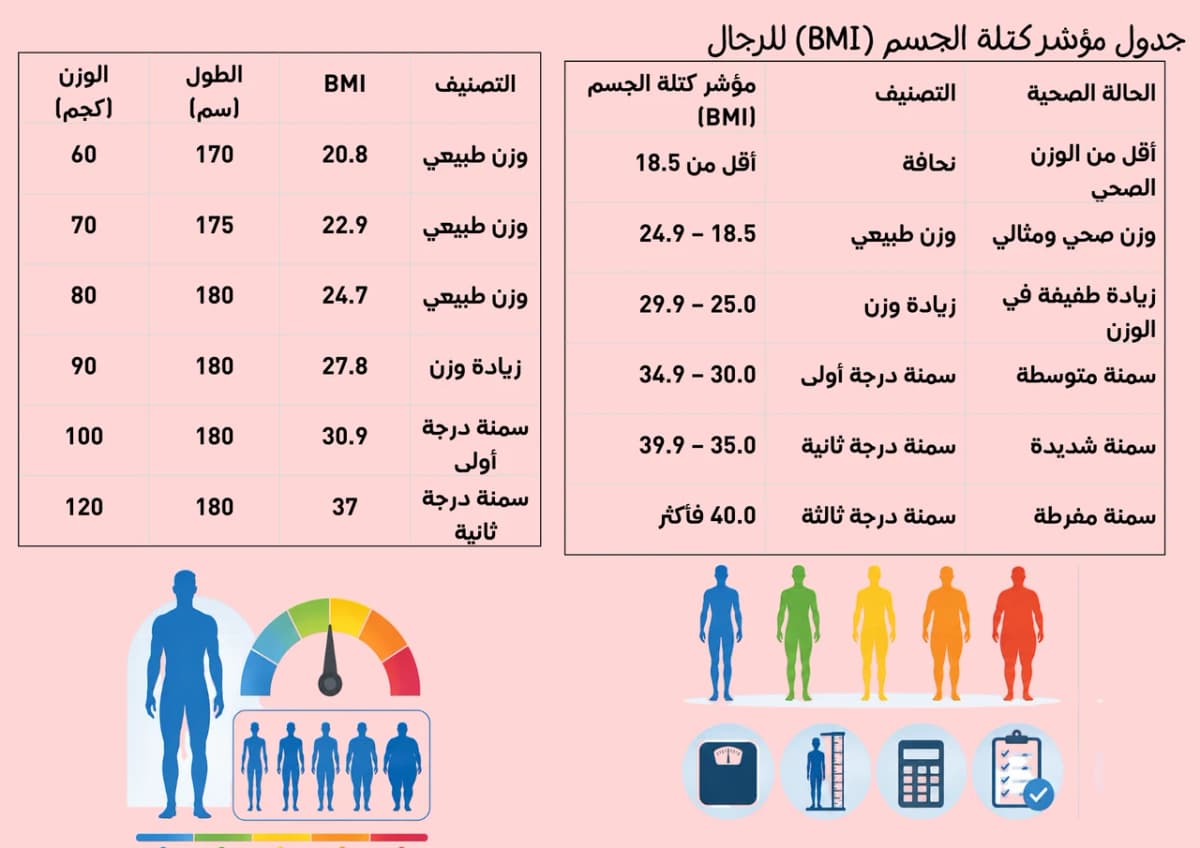
ما هو مؤشر كتلة الجسم للرجال؟
مؤشر كتلة الجسم رقم واحد يجمع الوزن والطول، يُحسب بقسمة الوزن بالكيلوغرام على مربع الطول بالمتر. تستخدمه الهيئات الصحية حول العالم أداةً للفحص الأولي لنقص الوزن وزيادته والسمنة. المعادلة نفسها للرجال والنساء، لكن تفاعلها مع تركيب الجسم يختلف.
النطاق الصحي لمؤشر كتلة الجسم للرجال
تصنّف منظمة الصحة العالمية المؤشر تحت 18.5 نقصاً في الوزن، ومن 18.5 إلى 24.9 صحياً، ومن 25 إلى 29.9 زيادة وزن، ومن 30 إلى 34.9 سمنة، و35 فأكثر سمنة مفرطة. هذه النطاقات للرجال نقطة انطلاق لا الصورة الكاملة - انظر ملاحظة الكتلة العضلية أدناه.
لماذا يضلّل المؤشر الرجال الرياضيين؟
العضلات أكثف من الدهون. الرجل الذي يرفع الأثقال بانتظام قد يكون وزنه أعلى ويقع في فئة «زيادة وزن» أو حتى «سمنة» وفق المؤشر، بينما نسبة دهونه في الواقع صحية تماماً. المؤشر يحسب كل كيلوغرام بالطريقة نفسها سواء أكان عضلاً أم دهناً. للرجال النشيطين، المؤشر مفرداً مؤشر ضعيف - استعن بنسبة الخصر إلى الطول، أو قياس نسبة الدهون، أو فحص DEXA إن أردت قراءة دقيقة.
كيفية استخدام الحاسبة
أدخل الطول بالسنتيمتر والوزن بالكيلوغرام. ستعرض الحاسبة المؤشر، وBMI Prime (المؤشر ÷ 25 - قيمة 1.0 عند الحد الأعلى للطبيعي)، وفئة منظمة الصحة العالمية. إن كنت تحمل كتلة عضلية كبيرة، اعتبر النتيجة إشارة من إشارات عدّة لا حكماً نهائياً.
المؤشر ونسبة الدهون لدى الرجل
نسبة الدهون الصحية لدى الرجل تتراوح عادة بين 8 و19 بالمئة. المؤشر بين 18.5 و24.9 يطابق هذا النطاق فقط لرجال ذوي كتلة عضلية متوسطة. الرياضيون النحاف العضلات يحملون أرقام BMI أعلى لنسبة الدهون نفسها. إن قال المؤشر إنك تعاني زيادة وزن لكن محيط خصرك أقل من نصف طولك، فأنت على الأرجح بحال جيدة.
متى لا يكفي المؤشر؟
مؤشر BMI أداة فحص سريع لا تشخيص. للرجال الذين يتدربون أو الذين تجاوزوا سن معينة أو أصحاب الكتلة العضلية العالية، استعن بمحيط الخصر، أو نسبة الخصر إلى الورك، أو قياس نسبة الدهون. إذا أشار المؤشر إلى زيادة وزن أو سمنة وكتلتك العضلية اعتيادية، فإن مختصاً صحياً يستطيع مساعدتك في وضع خطة.
الأسئلة الشائعة
مؤشر بين 18.5 و24.9 يُعدّ صحياً للرجال البالغين حسب منظمة الصحة العالمية. النطاقات نفسها التي تنطبق على المرأة، لكن قراءتها للرجال تتأثر بالكتلة العضلية.
غالباً نعم. العضلات أكثف من الدهون، فالرجال المتدرّبون قد يقعون في فئة «زيادة وزن» وفق المؤشر بينما نسبة دهونهم صحية. اقرن المؤشر بنسبة الخصر إلى الطول أو بقياس نسبة الدهون لقراءة حقيقية.
تقريباً: المؤشر الصحي يقابل عادةً 8 إلى 19 بالمئة من الدهون للرجال ذوي الكتلة العضلية المتوسطة. خارج هذا النطاق أو للنحاف جداً أو الرياضيين المفرطين، يصبح المؤشر أقل دقة كمعيار للدهون.
المؤشر بحد ذاته وزن مقسوم على مربع الطول، فلا يتغير تلقائياً. لكن مع تقدم العمر تميل نسبة الدهون إلى الزيادة عند المؤشر نفسه، لذا يصبح من المفيد دمج المؤشر مع محيط الخصر أو قياس نسبة الدهون.
المصادر
- نمط حياة صحي - توصيات منظمة الصحة العالمية بشأن مؤشر كتلة الجسم— منظمة الصحة العالمية
- نطاقات نسبة الدهون الصحية - مخطط ACE Fitness— المجلس الأمريكي للتمارين الرياضية
هل حللنا مشكلتك اليوم؟